Posts

Suchatula -- A Guest Post

Image
I have tried many times over the past 5 years to write about my experiences in the Centre (aka Sri Chinmoy Centre), what happened to shatter my faith in CKG (aka Chinmoy Kum ar Ghose or Sri Chinmoy) and why I finally left but I always got stuck on all the details. Here is my attempt at telling you my story. I joined the Centre in December 1986. I was friends with Nirbachita and Jeevan , who are the sister and brother of Yogaloy. In August 1986, Liz went to New York for an August Celebrations to see what her brothers were doing. She heard about CKG and the Centre from them and thought she'd check it out for herself. Liz came back to California and told me all about CKG, the Centre and all the cool people she had met. Right from the start I believed everything she told me about CKG. She gave me a Transcendental Picture and a few books to introduce me to his teaching. We started to attend the meditation classes in Cupertino, where Giribar was the Centre leader. For the first...

The Anvil

Image
Though it drives many of my readers crazy when I say it, I am and will always be grateful to Sri Chinmoy. He changed my life for the better. That's an objective fact. I may not know much, but I do know who I was before I joined the Center and who I had become by the time I decided to leave it. I was a better person. For that, I'll always be grateful. A lot of my friends have argued that Guru did nothing, that he added no value to our lives as disciples. In effect, they're arguing that whatever good experiences we had -- whatever progress we may have made in our personal development -- was the result of our own efforts, our own self-discipline. I've no doubt this is true for them. It's not so for me. For a few years in the mid-1980s, I experienced an exalted sense of being. Was it actually exalted? It felt that way to me, and Guru made it possible. I'm not selling myself short. I played a part in my own experience, obviously, and perhaps the most important par...

Living Without Magic

Image
I take my coffee black. I prefer it that way, without the milk and sugar that makes it so much easier to get addicted to in the beginning. I feel the same about religion. Magic and magical thinking are the milk and sugar of spirituality. It's what makes embarking on a religious life so attractive in the beginning. Perhaps it's even necessary at the start, even though in the end it becomes a disability. Like the old analogy of the two thorns -- sometimes it's necessary to use one thorn (or negative quality) to help extract another one stuck in your foot. Perhaps stories of saints, miracles, and the supernatural are necessary in the beginning to inspire one to tread the path of yoga. In the end, though, belief in these stories -- magic as I call it -- must be discarded, just as one discards the second thorn after it has helped you remove the one in your foot. I'm not saying that the path of conscious personal development -- the path of yoga -- need be bitter like the co...

An Instructive Example

Image
It's not a perfect example. The cancer eating away at the Catholic Church isn't the same as that corroding the Center. But it's instructive. Particularly in how the organization is now cooperating -- perhaps reluctantly -- with independent investigators to bring the truth to light. According to this New York Times article , after decades of turning a blind eye, the Vatican appointed a veteran clerical diplomat to address the scandal in Ireland. An Irish governmental Commission to Inquire into Child Abuse was then established and the Irish Archbishop then began to cooperate. The full Report by Commission of Investigation into Catholic Archdiocese of Dublin can be found here . The report is long, but it's worth a few minutes to scroll through the first section and skim through the commission's mandate and its broad findings, some of which seem particularly apropos to the situation now facing the Center's leadership. Of particular interest is the organizational ...

Organizational Chemo

Image
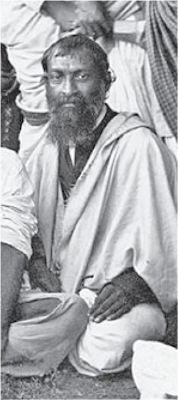
Have you ever heard of the Alipore bomb case? On April 30, 1908, two Indian revolutionaries tried to kill a British magistrate known for handing down harsh sentences against other freedom fighters. They missed their target. The bomb they threw landed in the wrong carriage, killing the wife and daughter of an English barrister. Within just a couple of days, the British arrested 33 suspects, including the suspected ring leader, Aurobindo Ghosh . Aurobindo, who was educated at King's College, Cambridge University, retained the pro bono services of the hitherto unknown defense lawyer Chittaranjan Das. C.R. Das, pictured, faced an uphill battle. The trial lasted a year, included more than 200 witnesses, and more than 5,000 exhibits. On top of it all, he had a client who was his intellectual equal. You might think that having a smart client would be an asset to the trial lawyer. Oftentimes, however, the client thinks he knows best and can't resist being a backseat driver at the tria...

"Even enemies can show respect."

If you haven't yet taken the time to view Karen Armstrong's presentation below, I'd encourage you to do so. It's about 25 minutes long and touches on many of the important issues facing us all. (Hat tip to my sister Liz for suggesting the video, and to this anonymous commenter for suggesting Ms. Armstrong's work more generally.) In her talk, Ms. Armstrong uses a story from the Iliad to underscore the importance of sympathy and compassion. It just so happens that I watched the movie Troy last night and was moved very much by that very scene as dramatized by Peter O'Toole and Brad Pitt . If you're not already familiar with the story or have not already watched the movie, the setup for the scene below is that the great Greek hero Achilles (Pitt) has just killed the great Trojan hero Hector in battle. After killing Hector, Achilles drags Hector's body behind his chariot and back to the Greek camp. Under the dead of night, the king of Troy, Priam (O...

Karen Armstrong on Compassion